Blog / christmas music
When to Release a Christmas Song in 2026
Release your Christmas song in early to mid-November. Send it to your distributor four to six weeks before release day, so Apple Music's holiday deadlines and Spotify's pitching window don't catch you out.
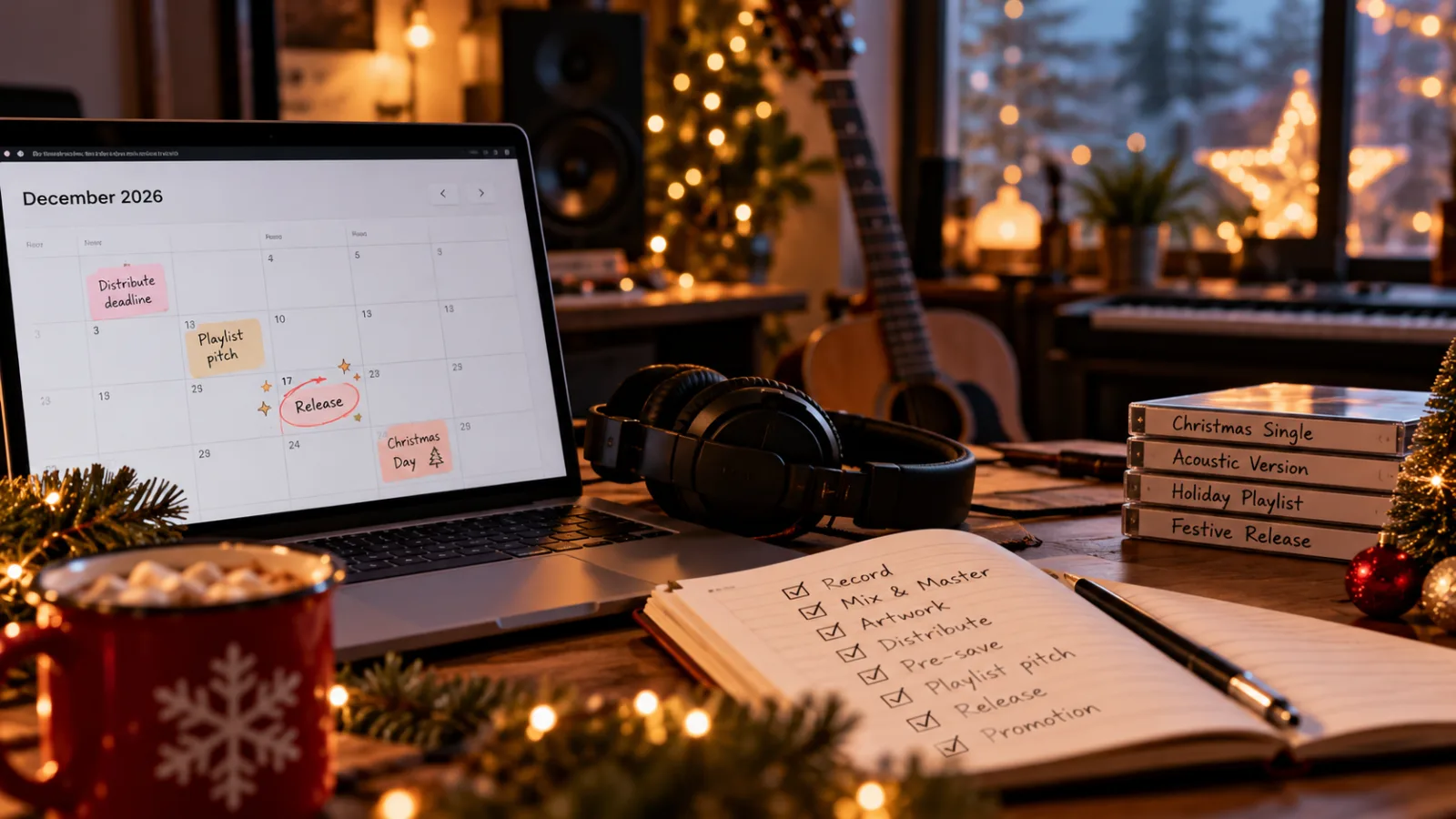
🎄Christmas music has a funny advantage over almost every other kind of release. People actively go looking for it.
They search for Christmas songs, build holiday playlists, look for music to play at parties, create seasonal videos, and revisit the songs that have become part of their December routine.
That creates an opportunity for artists beyond simply recording another Christmas song.
You could release an original Christmas single, put a new spin on a familiar holiday sound, release an acoustic version of an existing song, or bring an older track back into the conversation when people are in the mood to listen.
But timing matters. And if you're planning a Christmas release for 2026, the time to work backwards from your release date is now.
Here's how I'd approach it. ❄️
When should you release a Christmas song in 2026?
There isn't one perfect release date. The right date depends on the kind of music you're releasing and what you want people to do with it.
If you're releasing an original Christmas song, you want to give people time to discover it, add it to playlists, share it and come back to it throughout the season.
Release too late, and you may miss opportunities to build momentum. Release too early without a plan, and the song could lose attention before Christmas actually arrives.
Here's how I'd think about the timing.
Early November: Get ahead of the season
An early-November release gives your song more time to find listeners before the busiest part of the holiday season.
This can work well for original Christmas songs, festive pop releases, alternative holiday music and tracks you want people to discover gradually.
You also have more time to create content around the song, pitch it for playlist consideration and build a campaign that doesn't depend entirely on release day.
The trade-off? Some listeners won't be thinking about Christmas yet. You'll need a reason for them to listen now.
Mid-November: A useful balance
For many independent artists, mid-November is a sensible target.
There's enough time for a campaign to build, while Christmas is close enough to feel relevant. You can introduce the song, encourage pre-saves, release supporting content and give listeners several opportunities to come across it.
If I were planning a new Christmas single without an established holiday audience, this would be one of the first windows I'd consider.
Late November to early December: Still possible, but plan carefully
A late-November or early-December release can still make sense, particularly if the song is designed for a specific moment: a Christmas party, a holiday video, a festive campaign or a seasonal event.
But you have less room for delays, and less time to build familiarity.
You need the artwork, content, release links and promotional plan ready to go. Don't leave the entire campaign until the song is live.
What about releasing on Christmas Day?
You can, but ask yourself why.
If the song is intended as a Christmas Day gift to your audience, or you're releasing a live performance or special version for the occasion, December 25 may be the right date.
If your goal is to give an original Christmas song as much time as possible to find listeners during the season, I'd generally aim earlier.
The important thing isn't to follow a date because someone else recommended it. It's to choose a date that gives your particular release enough time to reach the right people.
Christmas music release deadlines you need to know
Choosing a date is one thing. Making sure your music actually reaches streaming platforms on that date is another.
Digital music services publish holiday delivery schedules because the volume of releases and updates increases during the season. Their deadlines can be earlier than you'd expect.
Apple Music's official 2026 holiday delivery schedule includes the following dates:
| Release Date | Apple Music delivery deadline |
|---|---|
| November 27, 2026 | November 20, 2026 |
| December 4, 2026 | November 27, 2026 |
| December 11, 2026 | December 4, 2026 |
| December 18, 2026 | December 11, 2026 |
| December 25, 2026 | December 18, 2026 |
| January 1, 2027 | December 25, 2026 |
These are Apple Music's published delivery deadlines, not universal upload deadlines for every distributor. Your distributor may need your release earlier to review it, deliver it to stores and resolve any problems.
If you want a Christmas Eve release, for example, don't assume that uploading on December 17 will be enough. That is Apple's delivery deadline for December 24 releases, not necessarily your distributor's submission deadline.
Check your distributor's current holiday guidance and work backwards from the earliest relevant deadline.
If you're still preparing a Christmas release in October, you're in a much better position than someone trying to upload a finished track in mid-December.
My recommendation: Give yourself a buffer
For a release with a fixed date, aim to have your music submitted around four to six weeks ahead where possible. This leaves room for delivery, corrections and promotion. Some distributors may require different timelines, so follow their actual requirements.
Before submitting, check:
- Final audio and mastering
- Artwork specifications
- Track title, artist names and credits
- Explicit-content labelling, where applicable
- Release date and territories
- Any cover-song licensing requirements
- Your artist profiles and release metadata
A release date is only useful if the release is ready to meet it.
Don't forget Spotify playlist pitching
If you're hoping to pitch an upcoming release to Spotify's editorial playlist team, delivery timing matters.
Spotify's guidance recommends delivering music at least seven days before release for pitching and Release Radar eligibility. Its release-planning guidance encourages artists to pitch further ahead where possible. For a seasonal release, I wouldn't treat seven days as the target; I'd treat it as a minimum checkpoint.
You can find the official guidance through Spotify for Artists.
More importantly, remember that pitching is only one part of promotion. It doesn't guarantee playlist placement, and your Christmas campaign shouldn't depend on being selected for a playlist.
Think about where else the song could find an audience:
- Your existing listeners and email subscribers
- Short-form video and social content
- Music blogs and relevant independent playlists
- Collaborators and other artists
- Local communities, events and seasonal performances
- Creators who make holiday-themed content
A good campaign gives the song several routes to discovery instead of waiting for one platform to do all the work.
What if you're not releasing a Christmas song?
You don't necessarily need to record a Christmas song to benefit from the season.
December creates opportunities for music that fits the mood, the moment or the way people use music during the holidays.
Here are a few possibilities.
Release a seasonal version of an existing song
An acoustic version, live recording, stripped-back performance or alternate arrangement can give an existing track a fresh reason to be shared.
Just make sure the version offers something meaningful rather than being a change made solely to fill a release slot.
Bring an older song back into focus
If you already have a track that fits the season, you could build a small campaign around it.
For example, a reflective song might work well in year-end content. An upbeat track might fit party playlists. A romantic song might suit holiday gift videos.
You don't necessarily need a new release. Sometimes you need a better reason for people to discover something you have already made.
Make music for a specific holiday use case
Think about the situations in which people search for music:
- Christmas party playlists
- Christmas dinner and background music
- Winter and holiday travel
- Festive reels and short-form videos
- Christmas gift and family videos
- Year-end reflection and recap content
You can't guarantee that a song will be picked up by any of these audiences. But understanding the intended use helps you make better creative and promotional decisions.
Build a campaign around the season, not just the date
An artist could use December to reconnect with listeners, share a live performance, revisit an older release or introduce an upcoming project.
The key is to make the campaign relevant to what listeners are doing at that time of year.
Make it easy for listeners to find your music
If you're promoting a song across Instagram, YouTube, newsletters, QR posters and other channels, sending people to different destinations can quickly become messy.
A smart link gives listeners one place to choose their preferred streaming platform.
For example, you could use a single link in your Instagram bio, your email signature, your video descriptions and your promotional materials. You can then use campaign tracking to understand where people are coming from and which activities are bringing attention to the release.
Aulto is built around this part of the release workflow, with Smartlinks, Pre-Save pages, Bio Pages and campaign analytics.
The point isn't to add another tool to your workflow for the sake of it. It's to make promotion easier to manage and give yourself a clearer picture of how people discover your music.
Don't let the fan relationship end with Christmas
This is worth thinking about before the campaign starts.
A listener might discover your Christmas song in November, listen to it in December and never come across your music again. That's a missed opportunity if they genuinely enjoyed what you made.
You don't need to bombard people with messages. You need a sensible way to stay connected with listeners who want to hear from you.
That could mean inviting them to join your mailing list, sharing an occasional update about your next release or using an opt-in WhatsApp channel where appropriate.
If someone signs up to hear about your music, be clear about what they'll receive and respect their preferences.
A seasonal release can be the beginning of a longer relationship. The same person who discovers your Christmas single could be interested in your next album, your live shows or another project entirely.
You won't know unless you give them a way to stay connected.
The takeaway
If you're planning to release a Christmas song in 2026, start with the date you want, work backwards from your distributor's deadlines and leave room for promotion.
If you're releasing music timed around Christmas rather than a traditional holiday song, the same principle applies: understand the moment you're trying to reach, make the music easy to discover and give listeners a reason to come back.
The release date gets the music out. What you do before and after that date is what gives the release a chance to build momentum.
And if you haven't started planning yet, don't overcomplicate it. Choose a realistic date, get the essentials in place and build a campaign you can actually execute.
One link for every release
Smart links, pre-saves, a bio page and a fan list. Free for 7 days.
Start free trial